

Preparing your vehicle for freezing temperatures requires testing battery output, maintaining recommended tire inflation, switching to winter-grade fluids, and taking full advantage of modern traction features like HTRAC AWD. Taking these proactive measures before severe weather hits ensures dependable starts and safe handling on icy roads. To break down everything owners should know about winter vehicle preparation, we sat down with our Service Manager at Herrnstein Hyundai, who brings over a decade of hands-on technical experience helping local drivers navigate harsh seasonal driving conditions.
Q: What are the most essential Hyundai winter car care tips for cold weather?
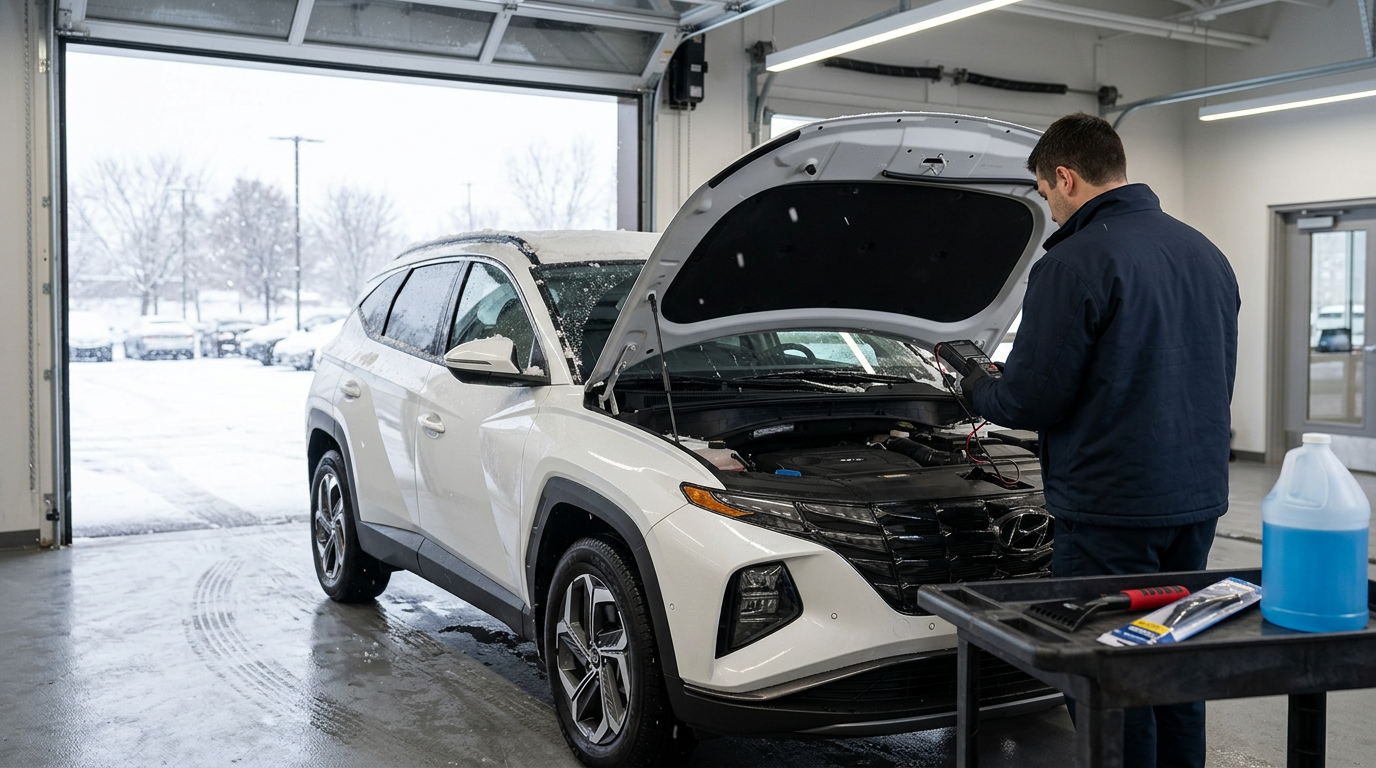
A: Cold weather places extra strain on your vehicle's mechanical and electrical systems, making early preparation essential for preventing winter breakdowns. The most critical items to address before sub-freezing temperatures arrive are testing your battery's health, inspecting tire tread and pressure, verifying your engine coolant mixture, and ensuring your windshield washing system is filled with an anti-freeze fluid. Ignoring any one of these areas increases the risk of starting failures or compromised vehicle control on slick pavement.
When temperatures drop significantly, engine oil thickens and chemical reactions inside your starter battery slow down, requiring more power to crank the motor just as the battery has less available energy. At the same time, ambient air temperatures cause tire pressure to drop naturally. Checking your tire inflation when the rubber is cold and maintaining fluid levels specified in your vehicle documentation are vital initial steps. Drivers interested in maintaining factory service standards can review our online car care guide for detailed schedule recommendations.
If you suspect your vehicle needs a pre-winter checkup, you can give our service desk a quick call to discuss any performance changes you have noticed. Taking care of small issues like worn wiper blades or a weak battery cell during autumn prevents major inconveniences once freezing rain and snow arrive. For hands-on maintenance assistance, our Chillicothe service center address makes it convenient to drop by for a complete system inspection.
Q: Does Hyundai HTRAC AWD include a specialized Snow Drive Mode for slippery roads?
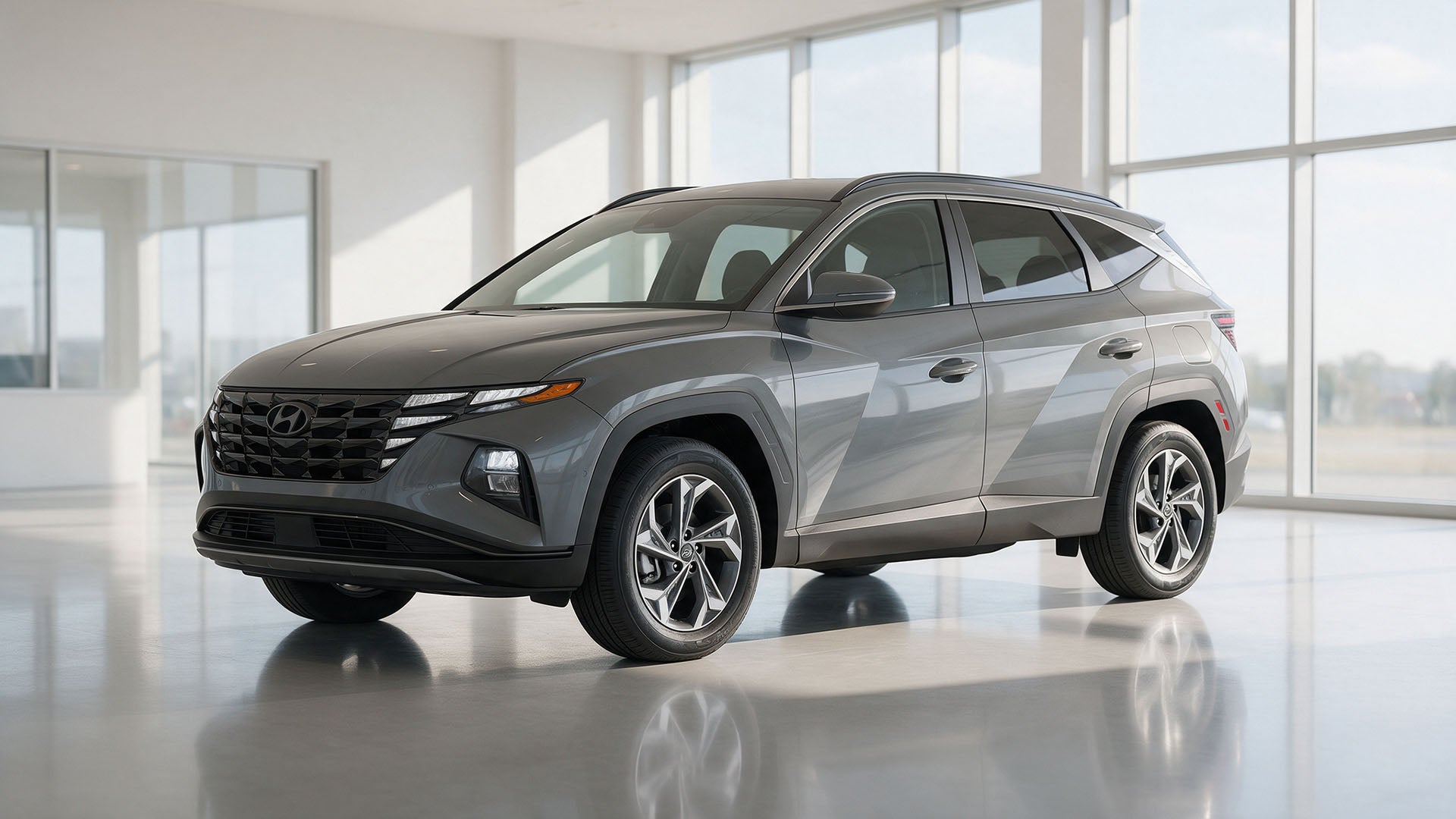
A: Yes, Hyundai HTRAC AWD includes a specialized Snow Mode that continuously optimizes torque distribution, transmission shift logic, and throttle sensitivity to reduce wheel spin on snow and ice. When engaged via the drive mode selector on models like the 2026 Hyundai Tucson AWD or 2026 Hyundai Santa Fe AWD, the system distributes power between the front and rear axles to help maintain directional stability when accelerating from a complete stop.
Drivers testing a 2026 Hyundai Santa Fe AWD usually ask how the Snow Mode setting differs from standard driving modes before taking the vehicle on a test route. In standard operation, the system favors front-wheel efficiency, but selecting Snow Mode locks in a higher ratio of rear-axle torque right from launch while softening initial throttle delivery. This prevents sudden surges of power that could break tire traction on packed snow or slush.
Understanding how your all-wheel-drive system operates gives you greater control during winter storms. Drivers exploring updated vehicle options can explore new Hyundai AWD models equipped with this technology. Our team can also help you review current new vehicle specials or complete an online credit application to streamline your upgrade before peak winter weather hits.
Q: How should Hyundai owners check battery health and cold cranking amps before freezing temperatures?
A: Owners should have a technician perform a professional conductance test to measure cold cranking amps and reserve capacity, as sub-freezing weather drastically reduces a battery's starting power. Standard 12-volt batteries lose a significant percentage of their cranking strength at 32 degrees Fahrenheit, and that capacity drops further as temperatures reach zero. A conductance test reveals whether your battery can deliver its rated amperage under cold load before it fails unexpectedly on an icy morning.
"Checking your tire pressure when ambient temperatures drop is the single simplest action you can take to keep your family safe on slick roads."
If your starter sounds slow during morning ignitions or your headlights dim at idle, your battery is likely reaching the end of its functional life. Replacing an aging battery before severe cold sets in protects your starter motor and alternator from excessive strain. For standard gas models, a fresh battery provides the exact cold cranking amps specified by the factory, while models equipped with Stop and Go engines require advanced AGM units to manage higher electrical loads.
Keeping electrical connections clean is equally important during winter driving. Road grime and terminal corrosion restrict electrical flow, making an otherwise healthy battery struggle to start your engine. If you need replacement components or winter accessories like heavy-duty floor mats, you can order genuine parts through OEM Hyundai parts and accessories online. For budget-conscious drivers, exploring our pre-owned inventory offers access to reliable late-model vehicles already equipped with fresh batteries and severe-weather prep.
Q: What tire pressure and tread depth levels are needed for winter driving in Beaver Township?
A: Maintaining tire pressure according to the driver-side door jamb placard and keeping tread depth at 4/32 of an inch or greater is essential for traction in winter driving conditions. Outside air temperatures reduce tire inflation by approximately 1 to 2 PSI for every 10-degree drop, which often triggers the Tire Pressure Monitoring System alert during seasonal cold snaps.
The gravel back roads around Beaver Township frequently develop slick mud and packed snow patches that demand maximum tire contact. While the legal minimum tread depth is 2/32 of an inch, driving on winter slush with tread below 4/32 severely compromises water displacement and stopping distances. Dedicated winter tires feature specialized rubber compounds that remain pliable in sub-45-degree temperatures, utilizing dense siping to bite into ice where standard all-season compounds tend to harden and slip.
Lowering tire pressure to gain traction in deep snow is a widespread myth that actually reduces handling stability and risks damaging tire sidewalls. Always inflate your tires to the cold specification listed on your vehicle door pillar label rather than the maximum pressure stamped on the tire sidewall. Drivers looking for winter-ready transport can browse our certified pre-owned vehicles to find models equipped with modern safety systems, or check our service hours and directions to drop in for a quick tire evaluation.
Q: How do extreme cold temperatures impact Hyundai EV battery range and preconditioning?
A: Freezing temperatures temporarily reduce electric vehicle battery range between 15% and 30% due to decreased lithium-ion chemical efficiency and the extra electrical power required for cabin heating. Utilizing cabin and battery preconditioning while your vehicle is still plugged into a charger allows the system to draw energy from the grid to warm the battery pack and interior before you depart.
For instance, drivers in Stockdale taking State Route 32 during long cold-weather commutes benefit significantly from setting preconditioning timers via their smartphone app. Starting your drive with a battery pack already warmed to its ideal operating temperature preserves your state of charge for highway driving. Models like the 2026 Hyundai Ioniq 5 also feature intelligent thermal management systems that automatically warm the battery when navigating toward a DC fast charger, ensuring optimal charging speeds despite low ambient temperatures.
Garaging your electric vehicle overnight minimizes range degradation by insulating the battery from extreme wind chill. Owners can learn more about electric vehicle thermal management and charging strategies by browsing our Hyundai EV resource center. If you are considering transitioning to an electric or hybrid vehicle for your daily drive, our team makes it easy to value your trade-in toward an updated model.
Q: Which essential fluids and maintenance services protect your Hyundai all winter long?
A: Switching to a winter-formula windshield washer fluid rated for below-freezing temperatures and verifying that your engine coolant is mixed to a 50/50 anti-freeze ratio are the most critical fluid services for cold-weather protection. Standard summer washer fluids can freeze on contact with a cold windshield or burst the fluid reservoir, while incorrect coolant ratios can lead to cracked engine blocks or frozen heater cores.
Winter maintenance also involves inspecting wiper blades for tears, checking brake pad thickness for stopping power on slick surfaces, and scheduling frequent undercarriage washes. In heavy salt-belt regions, road salt and liquid de-icers accumulate in vehicle underbodies, accelerating corrosion on suspension components and brake lines. A thorough undercarriage wash removes accumulated salt before rust can establish a foothold.
Taking care of these minor services before winter reaches its peak ensures your vehicle remains safe and dependable throughout the season. You can easily schedule your winter service appointment online to have our factory-trained technicians inspect your vehicle. If you prefer to speak directly with an advisor, feel free to give our team a quick call or stop by our service center location for personalized winter car care advice.
© 2026 Herrnstein Hyundai. All rights reserved.