

What Is Included in Essential Hyundai Winter Maintenance?
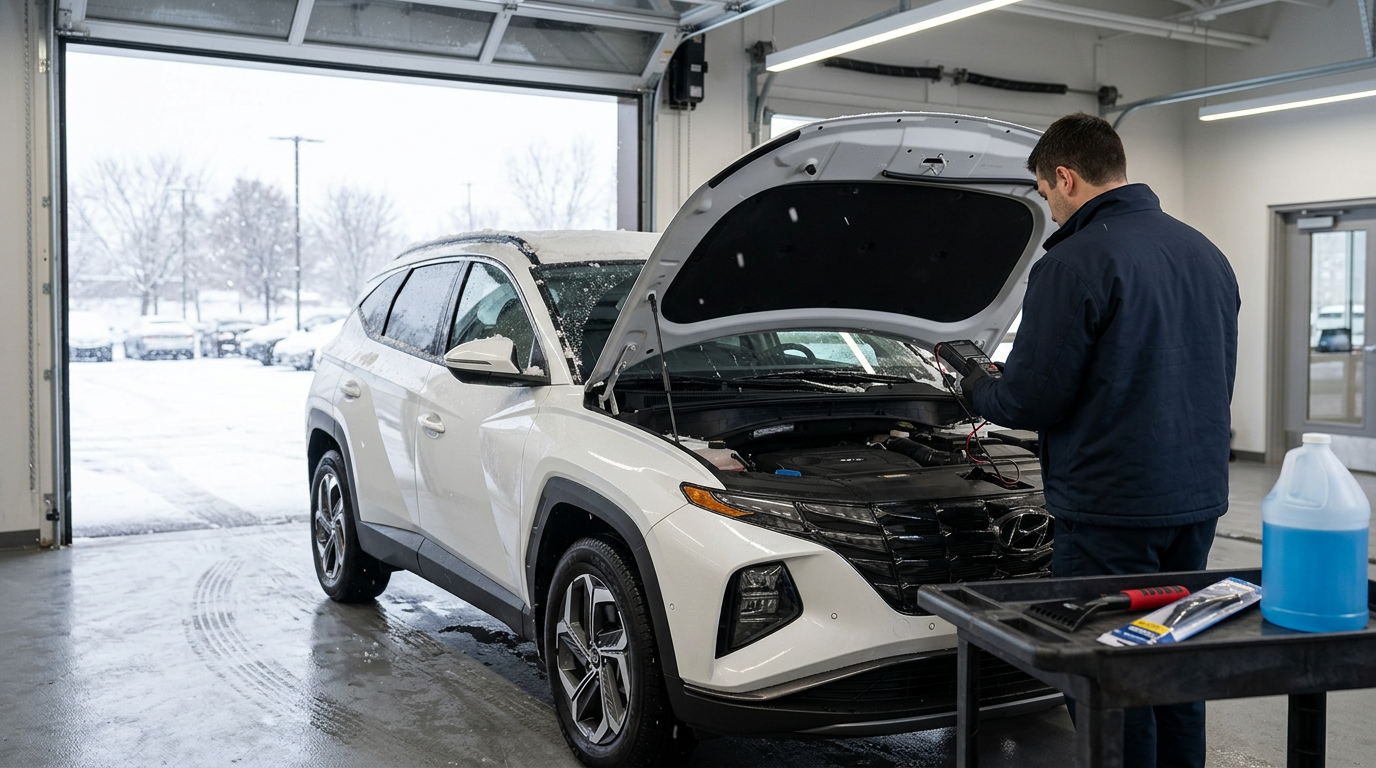
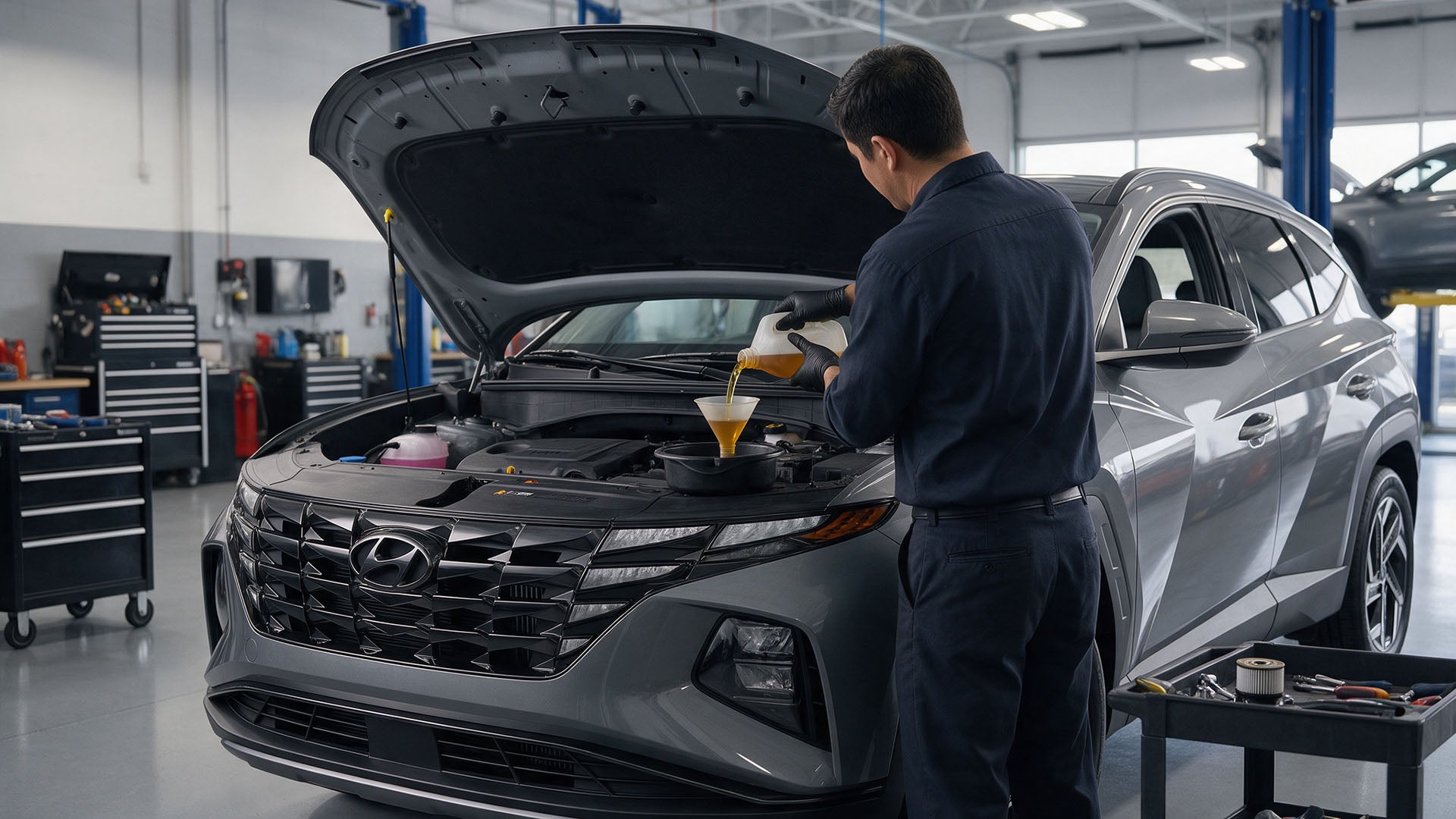
A complete Hyundai winter maintenance inspection focuses on testing the 12-volt battery, restoring proper tire pressure on cold rubber, inspecting brake hardware, checking engine coolant freeze protection, and topping off sub-zero windshield washer fluid. It ensures key mechanical systems withstand severe freezing temperatures, maintain emergency stopping performance, and prevent unexpected breakdowns during harsh winter conditions.
As a Service Manager at Herrnstein Hyundai with over 10 years of experience, I see how sudden frost cycles catch owners off guard every single year. A standard multi-point seasonal checkup covers vital components that suffer most under thermal shock. Our technicians evaluate the electrical system voltage under load, inspect rubber serpentine belts for micro-cracking, examine front and rear brake friction pads for moisture-related corrosion, and verify that all exterior lighting and window defrosters operate at peak efficiency.
Staying on top of factory-scheduled upkeep protects your vehicle whether you drive a brand-new model or rely on one of our certified pre-owned vehicles. If you ever have questions about what your specific model year requires before winter sets in, you can give our service team a quick call or check our main service bay location by pulling up directions to our dealership.
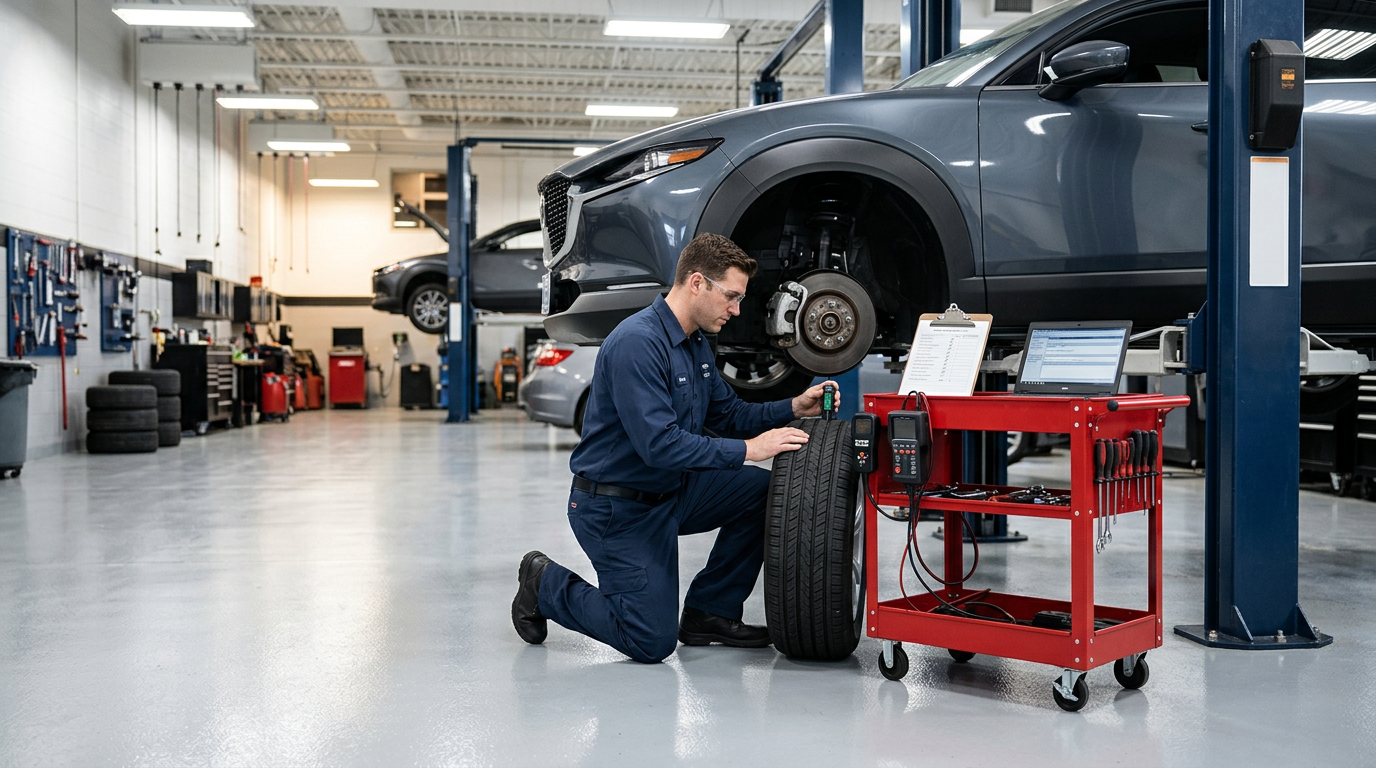
Table of Contents
- How Does Cold Weather Affect Tire Pressure in Hyundai Vehicles?
- How Does Hyundai HTRAC All-Wheel Drive Work on Snow and Ice?
- Which Critical Fluids and Battery Checks Protect Your Hyundai in Freezing Weather?
- How Do Sub-Zero Temperatures Impact Hyundai Electric Vehicles and Hybrids?
- How Can You Prepare Your Hyundai for Winter Driving?
How Does Cold Weather Affect Tire Pressure in Hyundai Vehicles?
Cold ambient air causes tire pressure to drop by approximately 1 to 2 PSI for every 10-degree Fahrenheit drop in outside temperature. This thermal contraction reduces air density inside the tire, frequently triggering the low tire pressure monitoring indicator on chilly mornings even when no puncture or valve leak is present.
When drivers pop in after the first major frost, they usually ask why their dashboard light illuminated overnight when the tires still look visually full. The tire pressure monitoring system detects this pressure drop immediately because cold air molecules expand. According to official Hyundai guidance, inflation pressure must always be checked and adjusted when tires are completely cold, using the baseline values printed on the driver-side center-pillar placard rather than the maximum pressure stamped on the tire sidewall. Operating on underinflated tires increases rolling resistance, reduces fuel economy, degrades tread life, and compromises emergency wet-weather handling.
Maintaining proper cold tire inflation is especially vital on the unpaved surfaces and rolling farmland of Beaver Township, where low pressure makes tires far more vulnerable to rim damage and tread punctures. Once you inflate your tires to the specified placard level, most Hyundai models reset the monitoring system automatically after 10 to 20 minutes of continuous driving above 15 mph. If you need assistance checking your tread depth or setting precise cold pressures, you can easily schedule a service appointment with our certified technicians, or explore severe-weather tire care gear through our official accessories catalog.
How Does Hyundai HTRAC All-Wheel Drive Work on Snow and Ice?
HTRAC All-Wheel Drive continuously monitors wheel speed, vehicle velocity, steering angle, and surface grip to actively distribute torque between the front and rear axles in real time. On icy or snow-covered roads, the electro-mechanical clutch system transfers power to the wheels with the best traction before slippage causes driver instability.
Unlike traditional four-wheel-drive systems that require manual driver engagement, HTRAC All-Wheel Drive operates fully automatically while seamlessly integrating with Electronic Stability Control. In standard driving conditions, the system directs most engine torque to the front wheels to optimize fuel economy. However, when sensor inputs detect front-wheel slippage on slick inclines or packed snow, HTRAC All-Wheel Drive lockup clutches instantly send up to 50 percent of total torque to the rear axle to maintain forward momentum and directional stability during acceleration.
Vehicles like the Hyundai Santa Fe, Hyundai Tucson, and the 3-row 2026 Hyundai Palisade Limited AWD utilize selectable drive modes such as Snow Mode to tailor throttle response and shift logic specifically for reduced-grip conditions. While HTRAC All-Wheel Drive provides exceptional control during acceleration and cornering, braking capability relies heavily on tire friction. Pairing all-wheel drive with dedicated snow tires delivers the shortest stopping distances on ice. Before setting out on winter trips, make sure to check our service hours and location details so you can stop by for a comprehensive winter driveline check.
Which Critical Fluids and Battery Checks Protect Your Hyundai in Freezing Weather?
Sub-freezing temperatures drastically slow down battery chemical reactions while placing increased electrical loads on starter motors, making 12-volt battery health checks and severe-weather fluid inspections essential. Verifying anti-freeze protection levels down to lower ambient thresholds and switching to sub-zero washer fluid prevents costly cooling system damage and hazardous windshield icing.
Freezing weather reduces a lead-acid battery's available cranking capacity by roughly 30 to 50 percent while engine oil thickens, forcing the starter motor to pull significantly more amperage. Our technicians test your battery's cold cranking amps and inspect terminal posts for oxidation or loose cable connections before cold weather sets in. If a battery is approaching three to five years of service, replacing it proactively avoids getting stranded on freezing mornings.
Engine coolant must maintain an adequate ethylene glycol concentration to prevent internal freezing, block cracking, and radiator rupture. Initial coolant replacement is typically scheduled around 60,000 to 100,000 miles or 10 years, followed by regular fluid level and freeze-point inspections during routine oil changes. Additionally, washer fluid line freezing can shatter washer fluid pumps, so filling the reservoir with washer fluid rated for -20 degrees Fahrenheit or lower is critical for drivers making daily winter trips along State Route 32 near Stockdale. If your vehicle needs electrical testing or a new power cell, view our available replacement options for a genuine Hyundai battery unit.
How Do Sub-Zero Temperatures Impact Hyundai Electric Vehicles and Hybrids?
Sub-zero temperatures reduce electric vehicle and hybrid driving range by 15% to 30% due to reduced lithium-ion battery chemical efficiency and increased high-voltage cabin heating power consumption. Utilizing utility-connected preconditioning while charging minimizes battery thermal stress and preserves maximum driving range for cold-weather commutes.
High-voltage lithium-ion battery packs operate most efficiently in moderate temperature windows. When ambient temperatures plunge below freezing, internal battery resistance increases, which slows electrochemical reactions and limits regenerative braking performance until the battery pack reaches its ideal operating temperature. Driving with resistive seat heaters and steering wheel heaters consumes far less battery power than blowing maximum cabin heat, helping extend overall driving range on freezing days.
Preconditioning your Hyundai EV or hybrid while plugged into a home charger uses grid power rather than stored battery energy to warm the cabin and elevate battery pack temperatures before you start your drive. Models equipped with heat pumps recover waste heat from electric motors to warm the cabin far more efficiently than traditional resistive heaters. Planning trips with garaged parking and scheduled departure preconditioning keeps battery capacity optimized even during extended regional cold snaps.
How Can You Prepare Your Hyundai for Winter Driving?
Preparing your Hyundai for winter requires assembling a dedicated emergency road kit, inspecting wiper blade rubber, verifying headlight clarity, and scheduling a pre-winter multi-point service inspection. Taking these proactive steps ensures your vehicle handles unpredictable freezing conditions safely while protecting long-term mechanical reliability.
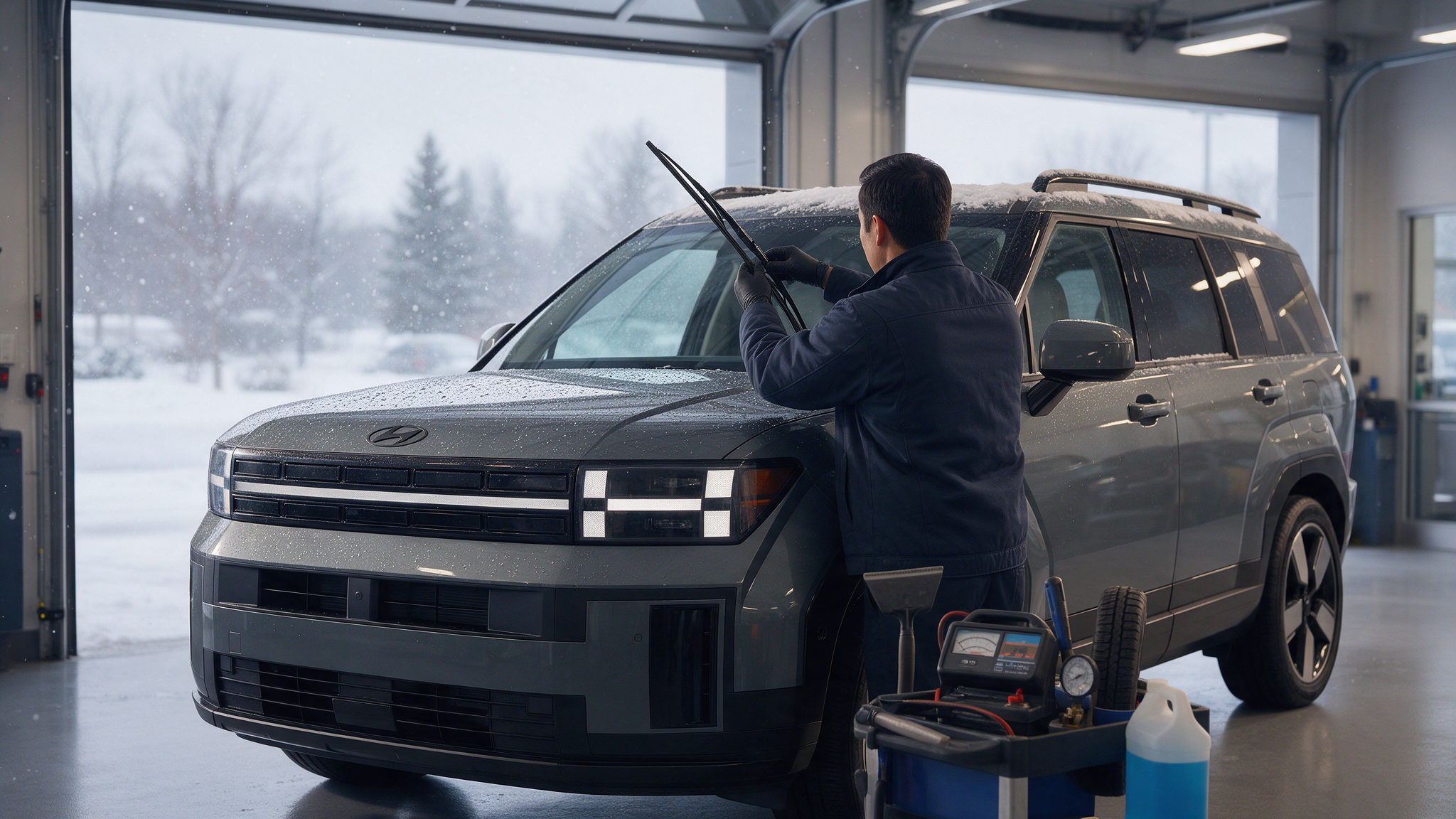
A complete winter preparedness plan combines vehicle maintenance with roadside readiness. Ensure your windshield wiper blades feature pliable, non-streaking rubber or winter beam-blade designs to prevent ice accumulation. Packing an emergency kit with heavy jumper cables, a snow brush with an ice scraper, a flashlight, thermal blankets, non-perishable snacks, and sand or traction mats gives you peace of mind if weather conditions deteriorate during travel.
Should an emergency occur on icy roads, Hyundai Roadside Assistance provides 24/7 manufacturer-backed support, including towing to an authorized service facility, flat tire assistance, and jump-starts. You can reach Hyundai Roadside Assistance: 1-800-243-7766 whenever emergency roadside help is needed. Taking care of your car's seasonal needs protects your investment for years to come. You can estimate future vehicle upkeep and total ownership budgeting using our online payment calculator tool, contact our team with a quick phone call, or get simple turn-by-turn directions to our service center to schedule your winter checkup today.
© 2026 Herrnstein Hyundai. All rights reserved.